Skip to product information
1 of 4

Eco Friendly Heating

Efficient Electric Underfloor Heating for Laminate, Vinyl and Wood Floors.

Efficient Electric Underfloor Heating for Laminate, Vinyl and Wood Floors.

Regular price £84.99 GBP  
Regular price £98.96 GBP Sale price £84.99 GBP  
Sale Sold out
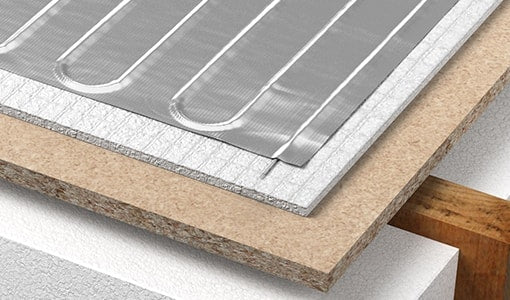
Warmup foil underfloor heating is a streamlined electric radiant system designed for floating floors like laminate, engineered wood, and vinyl. The heating elements are embedded in a reinforced aluminum foil mat which provides even heat distribution, allowing for a quick, dry installation directly under the finished floor without requiring a screed. The system is suitable for use in both wet and dry areas and is compatible with different floor finishes, such as wood, vinyl & carpet.

Order before 12pm for fastest delivery

Key Features:

  • 15-Year Warranty providing long-term peace of mind with a manufacturer-backed warranty.
  • Dry Installation (No Screed Required): Specifically designed for floating floors, this system requires no self-levelling compound, adhesive, or screed, significantly reducing installation time and mess.
  • SafetyNet™ Guarantee: Includes Warmup's unique protection plan—if the heater is accidentally damaged during installation, it will be replaced for free.
  • Ultra-Thin Profile: The reinforced aluminium foil mat has a negligible impact on floor build-up, making it perfect for renovations where floor heights must be maintained.
  • The reinforced aluminium foil acts as a continuous earth layer and a thermal diffuser, spreading heat evenly to eliminate hot and cold spots.
  • Eco-Friendly Efficiency: When used with Warmup Insulated Underlay, heat-up times can be reduced by up to 50%, leading to significant energy savings and lower carbon emissions.
  • Safe for Wet & Dry Areas: Fully earthed and IPX7 rated, the foil heater can be installed in bathrooms and kitchens without needing additional earthing grids.
  • The wire-based system can be easily cut and turned (without cutting the heating cable) to fit around permanent fixtures and irregular room shapes.
  • Foil Heating Mat 140W
Shipping calculated at checkout.
PRODUCT CODE / AREA OUTPUT (W) LENGTH (M) PRICE
WLFH-140W/140 1m² 140W 530mm
£84.99 GBP
WLFH-140W/210 1.5m² 140W 530mm
£102.00 GBP
WLFH-140W/280 2m² 140W 530mm
£128.00 GBP
WLFH-140W/420 3m² 140W 530mm
£195.00 GBP
WLFH-140W/560 4m² 140W 530mm
£242.00 GBP
WLFH-140W/700 5m² 140W 530mm
£298.00 GBP
WLFH-140W/840 6m² 140W 530mm
£350.00 GBP
WLFH-140W/980 7m² 140W 530mm
£402.00 GBP
WLFH-140W/1120 8m² 140W 530mm
£460.00 GBP
WLFH-140W/1260 9m² 140W 530mm
£518.00 GBP
WLFH-140W/1400 10m² 140W 530mm
£566.00 GBP
WLFH-140W/1680 12m² 140W 550mm
£677.77 GBP

Eco Friendly Foil Underfloor Heating

The Warmup Electric Foil Heater Mats, supplied by Eco Friendly Heating & Flooring, are ultra-slim (approximately 3mm) electric heating systems designed specifically for dry installation beneath floating floor finishes such as laminate, engineered wood and carpet.

This foil underfloor heating system provides even, comfortable radiant warmth across the entire floor surface. The reinforced aluminium foil construction ensures consistent heat distribution, helping create an efficient and cost-effective heating environment throughout the home.

Depending on insulation levels and room heat demand, foil heating can be used as either a primary or secondary heating solution, particularly in well-insulated living spaces.

How Does Foil Underfloor Heating Work?

The aluminium foil layer performs two important roles within the floor build-up. It acts as a continuous earth layer for improved electrical safety while also spreading heat evenly beneath the floor finish.

Because the system is installed directly beneath the final floor covering, there is no need for self-levelling compounds or wet trades. This makes installation faster, cleaner and ideal for renovation projects.

The result is a natural, gentle radiant heat that warms people and objects in the room rather than just the air.

Ideal Room Types & Installation Flexibility

Foil heating mats are best suited to regular-shaped rooms where the elements can be rolled out in straight, parallel runs. The mats can be turned by cutting the backing (never the heating element), allowing flexibility without compromising performance.

If you are comparing different systems for your project, our Electric Underfloor Heating Systems Collection Guide explains the best options for different room types and floor finishes.

Best Flooring Types for Foil Heating

Foil underfloor heating is designed primarily for floating floor constructions, including:

Using Vinyl or Carpet (Important)

When installing beneath softer finishes such as vinyl or carpet, a protective floating subfloor is required. This is typically achieved using a dual overlay board system.

This layer protects the heating system from pressure while ensuring efficient heat transfer and long-term durability.

Note: Foil systems are not suitable for wet rooms or fully tanked bathroom areas. For tiled wet environments, consider systems such as heating mats or loose wire. You can explore these in our StickyMat & EcoFloor Heating Mats Guide.

Engineered Wood & Laminate Considerations

Foil heating works very effectively beneath engineered wood and laminate flooring, providing fast response times and even heat distribution.

  • Avoid flooring thicker than 18mm
  • Ensure flooring is approved for use with underfloor heating
  • Do not use with permanently bonded underlays or metallic locking systems

The total floor thermal resistance should not exceed 0.15 m²K/W to maintain efficiency.

Why Insulation Matters

Installing foil heating over suitable underfloor insulation is essential for performance.

Proper insulation:

  • Reduces heat loss into the subfloor
  • Improves warm-up times
  • Helps lower running costs

In many cases, insulation can reduce heat-up times by up to 50%. You can also estimate system sizing using our Underfloor Heating Calculator.

Installation Overview

Foil underfloor heating is designed for straightforward installation:

  1. Roll out heating mats in parallel runs
  2. Maintain spacing between runs and walls
  3. Use foil bridging strips to maintain earth continuity
  4. Ensure mats lie completely flat with no folds

Laminate and engineered wood flooring can usually be installed directly above. Vinyl and carpet require a protective overlay system.

Compare Foil Heating with Other Systems

Foil heating is ideal for floating floors, but it is not the best solution for every project:

  • Foil Heating – Best for laminate, engineered wood, and dry installs
  • Heating Mats – Best for tiled bathrooms and kitchens
  • Loose Wire – Best for irregular layouts and detailed coverage

For a full comparison, see our Electric Underfloor Heating Guide.

Why Choose Eco Friendly Heating & Flooring

We specialise in practical, energy-efficient heating systems designed to work seamlessly with modern flooring. Foil underfloor heating offers a low-build, responsive and eco-conscious way to improve comfort throughout the home.

For deeper guidance, explore our Foil Underfloor Heating Guide and review real-world performance in the Foil Heating Running Costs Guide.

Technical Specifications:

  • Construction ETFE wire encased in aluminium foil
  • Operating voltage 230 V: 50 Hz
  • Output rating 140 W/m²
  • Max Width 500 mm
  • Mat Length 2 m to 24 m
  • Heating cable spacing 50 mm
  • Coil tail length 3 m
  • Approvals EUFH heating mat approvals EUFH heating mat approvals EUFH heating mat approvals
How quickly does foil underfloor heating warm up?

Foil underfloor heating begins producing warmth almost immediately after switching on. Most floating floors such as laminate or engineered wood start to feel warm within 20–40 minutes, depending on insulation levels and floor thickness.

Bringing a room fully up to temperature typically takes 1–2 hours, especially in colder conditions or poorly insulated spaces.

Is foil underfloor heating powerful enough to heat a room?

Foil heating systems such as 80W/m² outputs are usually designed as background or comfort heating in well-insulated homes.

They can sometimes act as primary heating in small or highly insulated rooms, but higher wattage systems such as heating mats or carbon film may be more suitable where heat demand is higher.

What flooring can foil underfloor heating be used with?

Foil heating is designed primarily for floating floor installations, including laminate and engineered wood flooring.

It can also be used beneath vinyl or carpet when installed with a protective build-up such as a dual overlay board system, which ensures safe heat distribution and floor stability.

Can foil underfloor heating be installed in bathrooms?

EcoFoil heating systems can be used in some bathroom environments when installed beneath floating floors and protected by an RCD, but they are not suitable for wet rooms, tanked floors or walk-in shower areas.

For tiled bathrooms, embedded heating mat systems are generally a better solution.

Do I need insulation under foil underfloor heating?

Yes. Installing foil heating over a suitable thermal insulation layer or insulation boards is strongly recommended.

Good insulation helps direct heat upward into the room, improves warm-up times and reduces running costs.

What thermostat should I use with foil underfloor heating?

Foil heating systems should be controlled using a programmable thermostat with a floor temperature sensor.

Popular compatible options include the Flexel Touch WiFi Thermostat for smart control or the Heatmiser Slimline-E for reliable programmable heating management.

Is foil underfloor heating expensive to run?

Running costs depend on electricity tariffs, insulation levels and heating schedules. Because foil systems are typically lower wattage, they can be very economical to run in well-insulated properties, especially when controlled using programmable thermostats.

Can foil heating be installed under furniture?

Heating elements should not be installed beneath fixed or heavy furniture such as wardrobes or kitchen units, as this can restrict heat transfer and reduce efficiency.
View full details