




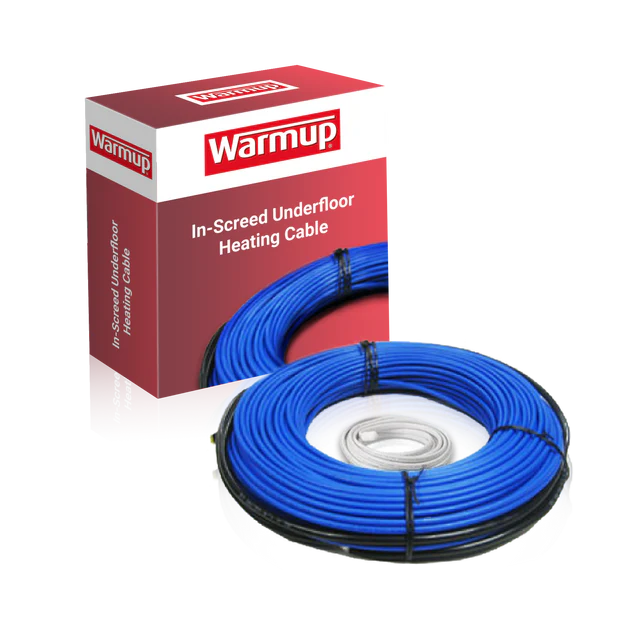

Warmup In-Screed Underfloor Heating System
The Warmup In-Screed Underfloor Heating System is a robust, high-output electric floor heating solution specifically designed for new builds, extensions and large-scale renovations where a new screed layer of approximately 50mm to 100mm is being poured. Supplied by Eco Friendly Heating and Flooring, this system uses the thermal mass of the floor to provide efficient, steady and long-lasting warmth.
This underfloor heating system is an excellent solution for underfloor heating in concrete floors. It is designed for projects where the floor is being formed from scratch and where a buried cable system makes more sense than surface-mounted heating. If you are still deciding which type of electric heating suits your project, start with our Electric Underfloor Heating Guide, our Electric Underfloor Heating Systems Collection Guide, and our Best Electric UFH Systems Buyer Guide.
The Inscreed Cable electric underfloor heating system is ideal for installation in concrete screed thicknesses ranging from 50mm to 100mm. To help improve heat-up times and reduce wasted heat, it is recommended to use insulation if the concrete subfloor is uninsulated or more than 100mm thick. For more help with build-up choices, see our Underfloor Heating Insulation Boards Guide and our Electric Underfloor Heating Installation Guide.
The Warmup In-Screed Heater is suitable for almost any flooring finish, making it a flexible option for projects where the final floor may change over time. Whether you prefer tile, wood, carpet, vinyl or polished concrete, the system provides consistent and comfortable heating once embedded safely within the screed. If you are matching heating to floor finish, our Underfloor Heating Compatibility Guide is also useful.
Suitable Floor Coverings for Warmup In-Screed Cable
Almost any floor covering can be considered with Inscreed Cable. Because the heater is embedded safely within cementitious screed, there is less risk of damaging the cable if the floor covering is changed later. Suitable floor finishes include:
- Tiles
- Laminate
- Engineered wood
- Vinyl
- Carpet
- Concrete / polished concrete
Tiles
If a tiled floor is being laid on top, flexible tile adhesive and grout must be used with the Warmup In-Screed electric underfloor heating system. If you are comparing tiled-floor systems closer to the surface, you may also want to look at our StickyMat Guide, Loose Wire Guide and DCM-PRO Guide.
Laminate / Wood
With laminate or engineered wood floors, it is essential that the flooring is no more than 18mm thick to help heat transfer efficiently through the floor finish. If a soft insulation layer is used beneath the flooring, it must be suitable for use with underfloor heating. For floating floor compatibility, our Underfloor Heating Compatibility Guide can help.
Concrete
Concrete provides strong heat retention and can deliver comfortable, even warmth once the slab is heated. A heated polished concrete floor can be an excellent choice where stable whole-floor warmth is preferred over faster surface response.
Installation of Warmup In-Screed Cable Underfloor Heating on Concrete Floors
Prior to installation, carefully read the installation manual provided. If the concrete base is thicker than 100mm or the subfloor is uninsulated, it is recommended to install insulation and lay the wire directly over it. For concrete bases less than 100mm thick or already insulated, the wire can be laid directly on the slab. However, insulation directly below the heating cable usually improves system efficiency and responsiveness.
Before beginning the installation, ensure the subfloor is suitable for screeding, rigid, and free of dust and debris. For the wider step-by-step process, see our Electric Underfloor Heating Installation Guide and our In-Screed Underfloor Heating Guide.
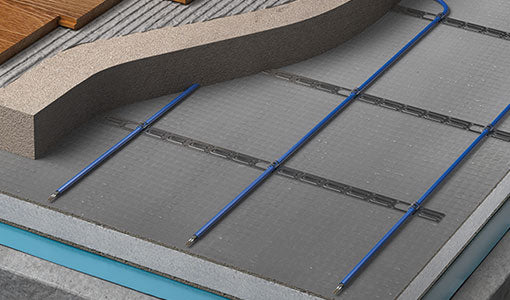
The Inscreed Cable should be laid at least 50mm apart and a minimum of 50mm deep within the screed. Metal fixing strips are used to secure the cable to the subfloor. These strips are laid out perpendicular to the heating element and fixed to the insulation board or concrete floor using fixing nails or adhesive. The heating cable is then laid in a zigzag pattern and clipped into the metal fixing strips, evenly spacing the cable for an even distribution of heat.
Once the cable is in place, the next step is to screed over the heating system by carefully pouring cementitious screed over the fixed Inscreed Cable to a depth of at least 50mm. The floor probe supplied with the thermostat should be positioned as close to the final floor finish as possible, embedded within the screed. The installation is completed by wiring the heating cable to a thermostat. For compatible controls, see our Underfloor Heating Thermostats Guide.
After the screed or levelling compound has fully dried, you can proceed to lay the final floor covering of your choice.
Typical Build-Up
From bottom to top:
- Concrete slab or prepared subfloor
- Insulation layer where required
- Metal fixing strips
- Warmup In-Screed heating cable
- Minimum 50mm screed cover
- Final floor finish
This is one of the main reasons in-screed systems are so different from foil heating, carbon film heating, StickyMat or Loose Wire systems. In-Screed heating becomes part of the floor structure itself, rather than sitting directly below the finished floor.
Features and Benefits
- Tough – 6mm thick heating cable protected by multiple layers of metal shielding and insulation
- Grounding braid makes it suitable for wet-room style environments where the overall build-up is appropriate
- Versatile – compatible with almost all floor finishes
- Suitable for new build and major renovation projects
- Floor covering can be changed later without the same risk of damage found with surface systems
- Steady, even warmth through the thermal mass of the screed
- Strong option for concrete floors and open-plan areas
Specifications
| Operating voltage | 230V: 50Hz |
| Output rating | 100 to 210W/m² |
| Cold tail length | 2.5m |
| Cable diameter | 6mm |
| Approvals | SEMKO, FIMKO |
| Warranty | 10-year warranty |
Useful Guides
- In-Screed Underfloor Heating Guide
- In-Screed Running Costs Guide
- Electric Underfloor Heating Guide
- Electric Underfloor Heating Installation Guide
- Underfloor Heating Thermostats Guide
- Underfloor Heating Insulation Boards Guide
- Underfloor Heating Compatibility Guide
- Carbon Neutral Heating Guide
If you are still deciding which electric underfloor heating system suits your project best, compare this product with our Loose Wire Guide, StickyMat Guide and DCM-PRO Guide.
Warmup In-Screed Underfloor Heating – FAQs
Q1: What is Warmup In-Screed Underfloor Heating?
A: It is an electric heating cable installed within a new screed layer. The screed stores heat and releases it gradually, helping create steady and even warmth across the floor.
Q2: Is Warmup In-Screed suitable for new builds?
A: Yes. It is especially well suited to new builds, extensions and major renovations where a new screed floor is being installed.
Q3: Can Warmup In-Screed be used as the main heating in a room?
A: In many well-insulated rooms it can be used as a primary heat source. This depends on the room’s heat loss, the floor build-up and the output selected.
Q4: What floor finishes can be used over Warmup In-Screed?
A: It is suitable beneath tiles, laminate, engineered wood, carpet, vinyl and polished concrete, provided the final floor finish is compatible with underfloor heating.
Q5: Is Warmup In-Screed good for concrete floors?
A: Yes. It is specifically designed for screeded and concrete floor constructions and is a strong option where the heating cable can be embedded safely within the floor build-up.
Q6: How deep should the screed be above the heating cable?
A: The system is generally designed for screed depths between 50mm and 100mm. The cable should be installed at least 50mm deep within the screed.
Q7: Does Warmup In-Screed need insulation?
A: Insulation is strongly recommended, especially where the concrete base is thick or uninsulated. It helps reduce downward heat loss and improves efficiency.
Q8: How far apart should the heating cable be installed?
A: The cable should be laid at least 50mm apart to ensure safe and even heat distribution.
Q9: Can the Warmup In-Screed cable be cut to fit?
A: No. The heating cable must not be cut. The correct size should be chosen for the heated area.
Q10: Is Warmup In-Screed suitable for bathrooms?
A: Yes, it can be used in bathrooms when installed correctly within the screed build-up and connected in line with current electrical regulations.
Q11: How long does Warmup In-Screed take to heat up?
A: In-screed systems usually warm up more slowly than surface heating systems because the screed acts as a thermal mass. Once warm, the floor releases heat steadily over time.
Q12: What thermostat should be used with Warmup In-Screed?
A: A thermostat with a floor sensor is recommended. Smart and programmable thermostats are often the best choice because they help manage the slower response of screed systems.
Q13: Can flooring be changed later without damaging the heater?
A: Yes. Because the heater is embedded within the screed, the cable is better protected than surface-mounted systems when the final floor covering is changed later.
Q14: Is Warmup In-Screed better than StickyMat or Loose Wire?
A: It depends on the project. In-Screed is often better for new screed floors and large open-plan spaces, while StickyMat and Loose Wire are more common for renovations closer to the final floor finish.
Q15: What are the main benefits of Warmup In-Screed?
A: The main benefits are durability, compatibility with almost all floor finishes, suitability for new builds, steady whole-floor warmth and reduced risk of damaging the heating when changing floor coverings later.
Planning heating within a new screed or concrete floor?
Understand build-up depth and suitability in our In-Screed Underfloor Heating Guide. You can also compare real usage costs in the In-Screed Running Costs Guide, and explore overall system comparisons in the UFH Systems Collection Guide.


